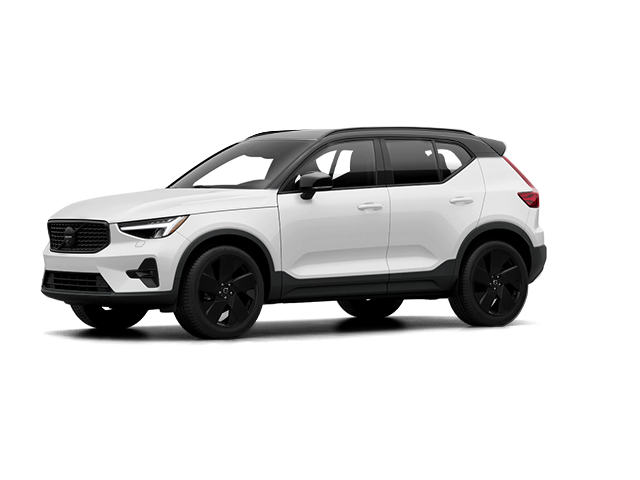
Photo for illustrative purposes only.
Find out moreVolvo Cars Toronto

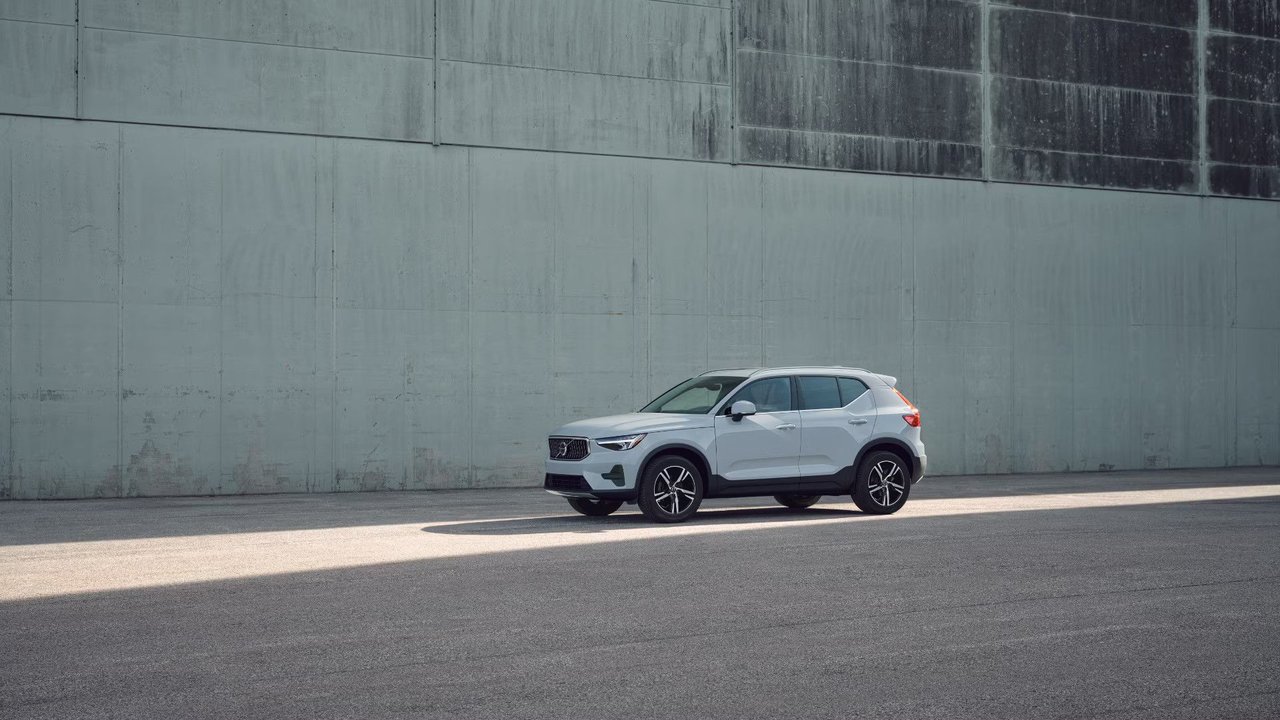
Fall driving in Ontario means wet pavement, wet leaves, and mornings where the road grip you had yesterday just isn’t there today. The 2026 Volvo XC40 comes with all-wheel drive as standard, and that single detail changes how the SUV behaves the moment the weather turns.
This isn’t a full walkthrough of every XC40 trim or feature. It’s a look at what standard AWD actually does for a driver navigating slick streets, standing water, and leaf-covered lanes this season.
On the XC40, all-wheel drive isn’t an upgrade you have to chase down a trim ladder. It comes paired with the B5 mild-hybrid powertrain: a 2.0 L turbocharged four-cylinder engine making 247 hp and 258 lb-ft of torque, routed through an 8-speed automatic transmission.
That pairing matters because the AWD system isn’t bolted onto a base setup as an afterthought. It’s part of how the whole drivetrain is tuned, so power delivery and traction work together rather than one compensating for the other.
|
Spec (B5 AWD) |
Value |
|
Engine |
2.0 L turbocharged I4 |
|
Horsepower |
247 hp |
|
Torque |
258 lb-ft |
|
Transmission |
8-speed automatic |
|
Drivetrain |
AWD |
AWD sends power to all four wheels instead of just the front or rear pair. When one wheel loses grip, on a puddle, a patch of wet leaves, or a slick manhole cover, the system can shift power to the wheels that still have traction.
The suspension does its part too. The XC40 uses a MacPherson strut setup up front and an independent rear suspension, tuned to keep the tires planted over uneven urban pavement rather than letting the body bounce and unsettle the contact patches.
Ground clearance sits at 205 mm, with an approach angle of 20.3 degrees, a breakover angle of 21.8 degrees, and a departure angle of 26.9 degrees. Those numbers aren’t about off-roading. They’re about clearing a flooded curb cut or a steep driveway apron without scraping or losing composure.

Wet-weather driving isn’t just about the highway. It’s the lane change around a slower car in the rain, the acceleration from a stop where the road is slick with fallen leaves, and the moment you brake a little earlier than usual because you’re not sure how much grip you have left.
Acceleration, cornering, and pulling away from a light all feel different when the pavement is wet. Standard AWD is built to reduce that uncertainty by keeping torque distributed to the wheels with the most grip, rather than asking two wheels to do all the work.
Steering and braking play a role too. The XC40’s turning circle of 11.4 m and its compact footprint (4,440 mm long, 1,863 mm wide) make it easier to react in tight spaces, whether that’s a sudden lane shift or a parking lot with reduced visibility from rain on the glass.
Cargo space doesn’t disappear in the trade-off. The XC40 offers 569 L behind the rear seats and 1,432 L with them folded down, both measured to the roof, enough for grocery runs, sports gear, and the damp outerwear that comes with an Ontario fall.
Drivers doing daily commutes, school runs, and weekend errands are the ones who feel standard AWD the most, not because they’re chasing performance, but because they’re dealing with unpredictable pavement multiple times a day.
A driver who values steady, predictable behaviour over outright speed will notice the difference more than someone chasing a quicker 0-100 km/h time. The XC40’s 6.4-second run to 100 km/h is respectable, but the more relevant number for fall driving is that every drive starts with all four wheels already working together.
AWD comes standard on the Core, Plus, and Ultra trims in the 2026 XC40 lineup, keeping the traction story consistent without requiring a shopper to hunt for it on a build sheet.
Standard AWD on the 2026 XC40 pairs a 247 hp turbocharged engine with a drivetrain built to manage rain, wet leaves, and shifting grip without asking the driver to think about it. That combination is what makes fall commuting less stressful.
Visit Volvo Cars Toronto in Toronto to see the XC40’s AWD setup up close and test drive it in real fall weather conditions. Feeling the traction for yourself says more than any spec sheet can.
Photo for illustrative purposes only.
Find out more
Adapter-Free Supercharger Access: What the 2027 Volvo EX60’s NACS Port Opens Up
Charging an EV shouldn’t feel like carrying a bag of adapters. If you’re weighing the 2027 Volvo EX60, one detail matters more than it might seem:...
Read more
How Far the 2026 Volvo XC60 T8 Drives on Electric Before Switching to Gas
Most commutes are shorter than drivers think, and that gap between how far you actually drive and how far you assume you drive is exactly where a...
Read more
What Changes in the 2026 Volvo XC60 Polestar Engineered
If you’re cross-shopping performance SUVs in Ontario, the 2026 XC60 Polestar Engineered deserves a closer look. It’s the sportiest way into Volvo’s...
Read morePowered and developed by
