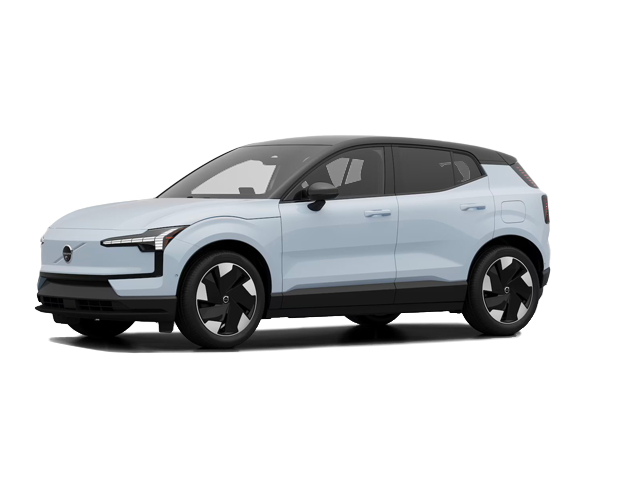
Photo for illustrative purposes only.
Find out moreVolvo Cars Toronto

The 2026 Volvo EX30 is a compact electric SUV that takes a different approach to interior design than most vehicles in its class. Rather than packaging convention into a smaller body, Volvo rethought how a compact cabin should use its limited space — particularly around storage, the centre console, and the display layout. Pair that with a confirmed electric range of 476 km (Single Motor, NRCan 2026) and a powertrain that handles both urban commutes and highway travel, and the EX30 makes a case that compact does not mean compromised.
This article covers three things in depth: what the EX30's cabin is actually like, what the range numbers mean in practice, and how the two powertrain options shape the day-to-day experience.
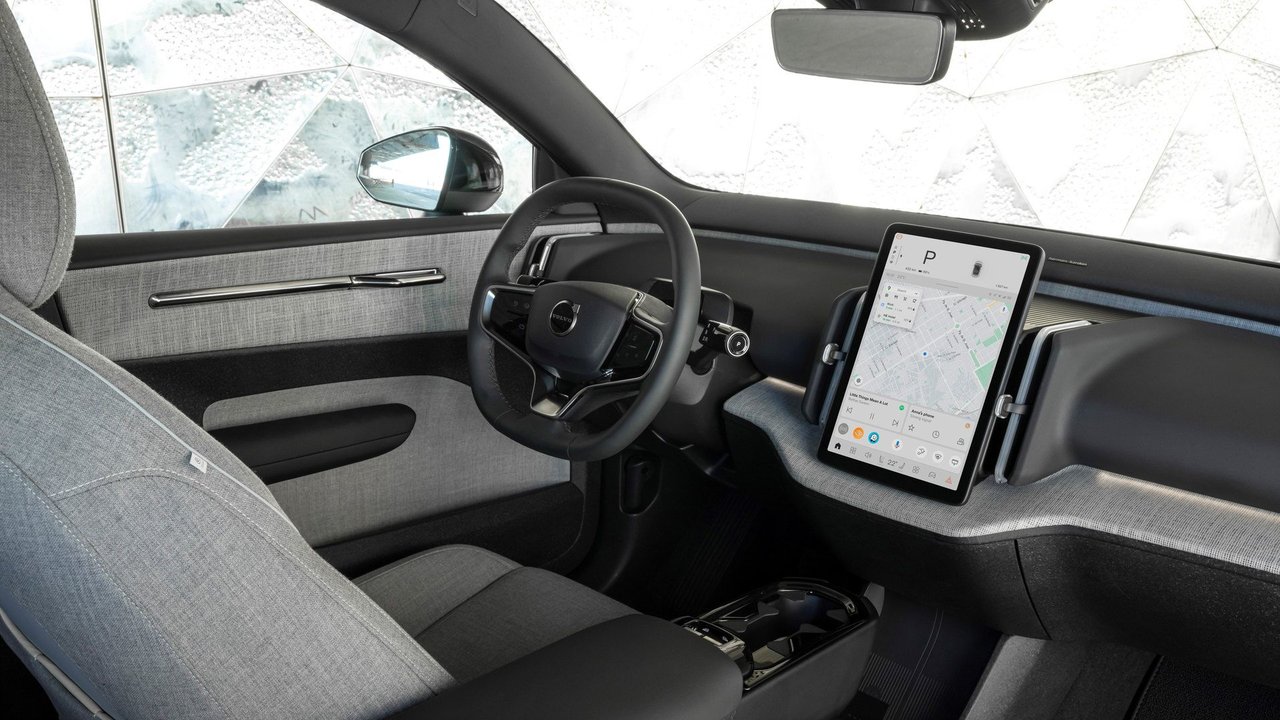
The most distinctive element of the EX30 cabin is what Volvo chose to remove. There is no traditional instrument cluster in front of the driver. Instead, all driving information — speed, navigation, battery state, and assistance system status — is displayed on a single 12.3-inch centre display. This is a horizontal, landscape-oriented screen positioned in the middle of the dashboard rather than behind the steering wheel.
The practical effect is a dashboard that reads as open and uncluttered. There are no pods, no layered display stacks, and no physical climate controls competing for attention. Climate, volume, and driving mode adjustments all run through the centre screen, which is operated via touch.
The floating centre console is another defining feature. The gear selector and key controls sit on the screen, which frees the console area between the seats to function as genuine storage space with a pass-through design. This gives the cabin a more open feel than the dimensions suggest.
Four interior design themes are available — each with its own colour palette, material texture, and decor. All trims use a Textile & Nordico upholstery as standard. The Plus and Ultra trims add access to the Ambience lighting package — five themes inspired by Scandinavian landscapes, each with a shifting colour tone and an optional ambient soundscape. The Tailored Wool Blend and Wool Blend & Nordico upholstery options are available on Ultra.
Storage throughout the cabin reflects the compact footprint thoughtfully. Large door pockets, a front storage area, a sliding cupholder unit, front and rear USB-C ports (Plus and Ultra), and a removable rear storage box all help the EX30 manage the small things that accumulate over a day of driving. A front load compartment — a small frunk under the front hood — adds practical space for charging cables.

The 2026 EX30 is available with two powertrains, and the range figures differ materially between them.
Single Motor Extended Range (RWD): 476 km NRCan 2026 combined range. Energy consumption is 1.9 Le/100 km city, 2.3 highway, 2.0 combined. This is the more efficient of the two options and the one most city-focused drivers will find sufficient. With 476 km of range, a driver covering 50 km per day needs to charge roughly once every nine days — or keep the habit of plugging in overnight without pressure.
Twin Motor Performance (AWD): 407 km NRCan 2026 combined range. Energy consumption is 2.0 Le/100 km city, 2.3 highway, 2.2 combined. The AWD configuration loses approximately 69 km of range compared to the Single Motor, which is the direct trade-off for all-wheel drive traction and the significant performance upgrade.
|
Powertrain |
Drive |
Range (NRCan 2026) |
0–100 km/h |
|---|---|---|---|
|
Single Motor Extended Range |
RWD |
476 km |
7.4 sec |
|
Twin Motor Performance |
AWD |
407 km |
3.6 sec |
The EX30 uses an 11 kW on-board charger (OBC) standard across all trims. DC fast charging peaks at 153 kW. At a 175 kW DC station, the battery charges from 10% to 80% in approximately 56 minutes. At a 50 kW station, the same charge takes approximately 28 minutes. For drivers with home Level 2 AC charging at 32A, a full charge takes approximately 39 hours on 1-phase — which means most overnight scenarios do not reach a full charge, but top-up charging from a partial state is fast enough for daily use.
A heat pump is standard across all three EX30 trims. This matters in Canadian winters: a heat pump uses significantly less battery energy to warm the cabin than resistive heating, which protects range efficiency in cold temperatures. Heated steering wheel and heated front seats are also standard on all trims.
The Single Motor Extended Range produces 268 hp and 253 lb-ft of torque in a rear-wheel drive layout. At 7.4 seconds to 100 km/h, it is brisk without being aggressive. The RWD layout gives it a rear-biased balance that drivers familiar with rear-drive vehicles will recognise as natural. In urban driving, the EX30's 4,233 mm length and tight turning circle make it easy to place in traffic and parking situations that larger SUVs navigate around.
The Twin Motor Performance adds a front motor for AWD and increases total output to 422 hp and 400 lb-ft of torque. The 0–100 km/h time drops to 3.6 seconds — the fastest-accelerating Volvo in the Canadian lineup at the time of writing. Traction in wet or low-grip conditions is the practical day-to-day argument for the Twin Motor; the performance figure is a secondary benefit for drivers who find it relevant.
Drive modes — available across all trims — let the driver adjust throttle response and regenerative braking intensity. One-pedal drive capability allows the EX30 to decelerate to a full stop using motor regeneration alone, which suits urban driving patterns and recovers energy that would otherwise be lost.
The EX30's compact dimensions do not reduce its safety specification. All three trims include Advanced Sensing Technology — a suite covering pedestrian and cyclist detection, intersection autobrake, oncoming lane mitigation, run-off road mitigation, rear collision warning, and lane keeping assistance. A door-opening alert system specifically addresses cyclist safety, flagging when a door is about to open in front of an approaching cyclist, scooter, or runner. Park Pilot Assist is standard on the Ultra trim, handling perpendicular, parallel, and diagonal parking autonomously.
If reading about the single-screen layout and floating console has you curious, the best next step is seeing it in person. Swing by Volvo Cars Toronto in Toronto — the team can walk you through the four interior themes side by side and let you judge the display layout and storage configuration yourself.
Photo for illustrative purposes only.
Find out more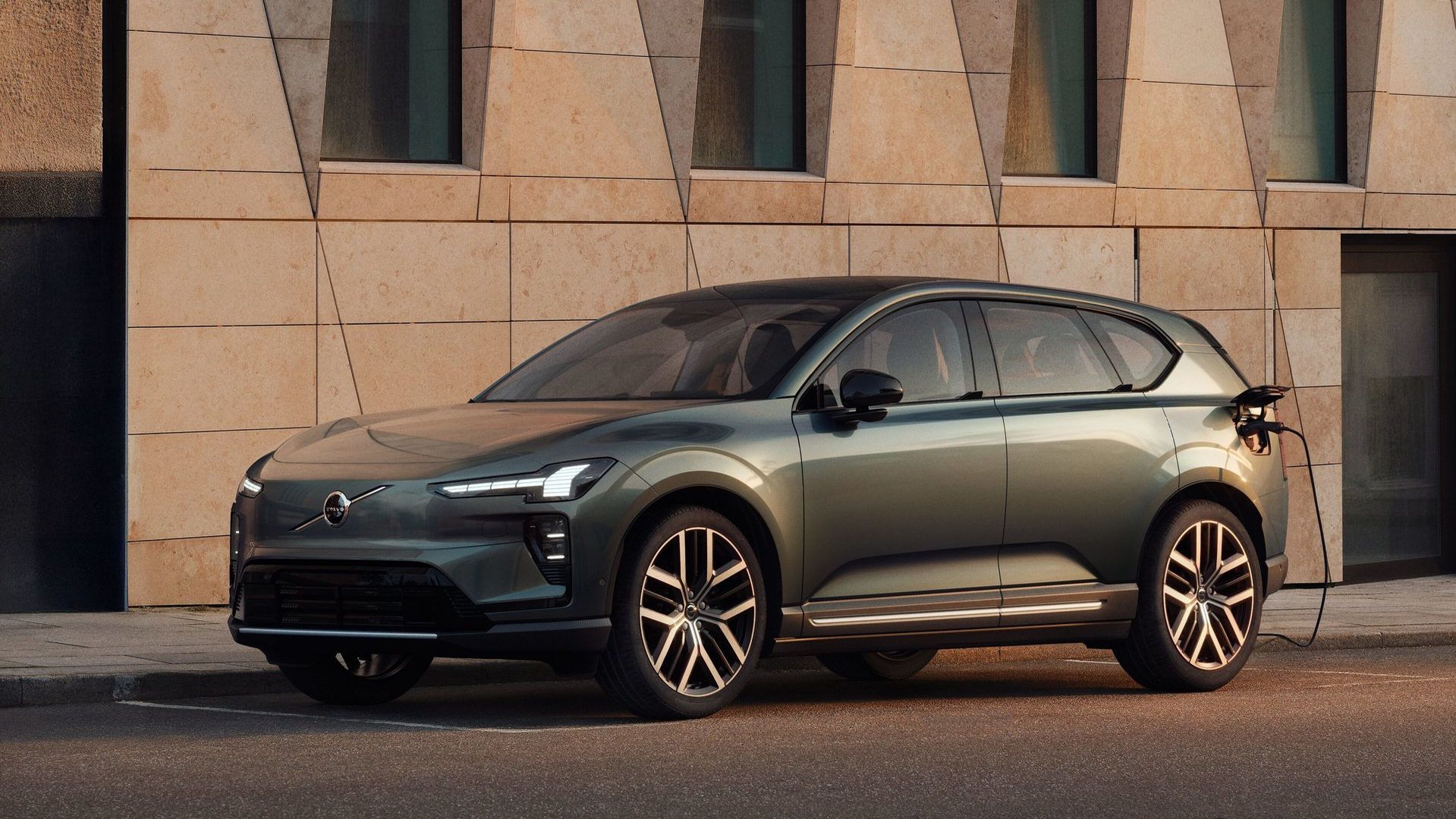
Adapter-Free Supercharger Access: What the 2027 Volvo EX60’s NACS Port Opens Up
Charging an EV shouldn’t feel like carrying a bag of adapters. If you’re weighing the 2027 Volvo EX60, one detail matters more than it might seem:...
Read more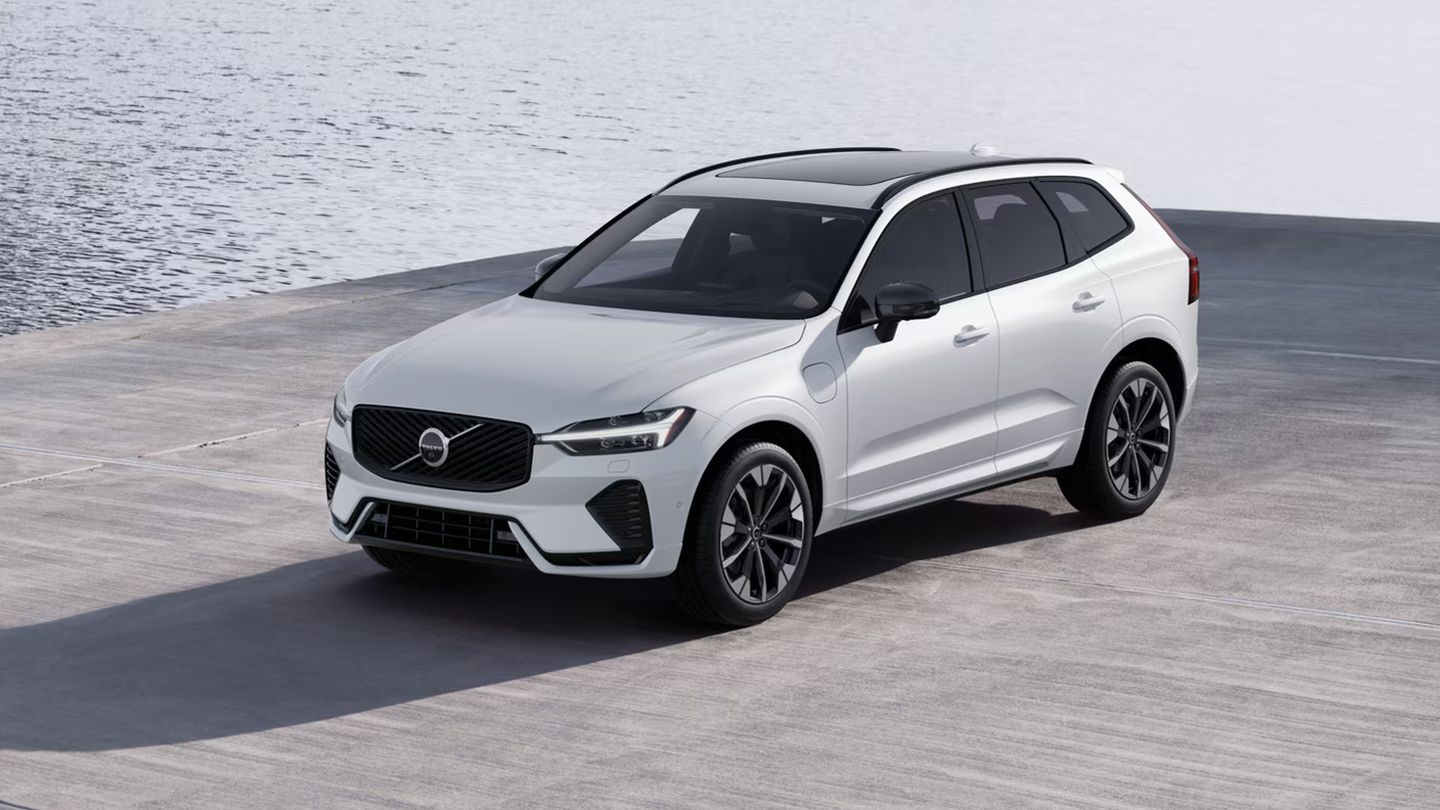
How Far the 2026 Volvo XC60 T8 Drives on Electric Before Switching to Gas
Most commutes are shorter than drivers think, and that gap between how far you actually drive and how far you assume you drive is exactly where a...
Read more
How Standard AWD Helps the 2026 Volvo XC40 on Wet Fall Roads
Fall driving in Ontario means wet pavement, wet leaves, and mornings where the road grip you had yesterday just isn’t there today. The 2026 Volvo...
Read morePowered and developed by
